
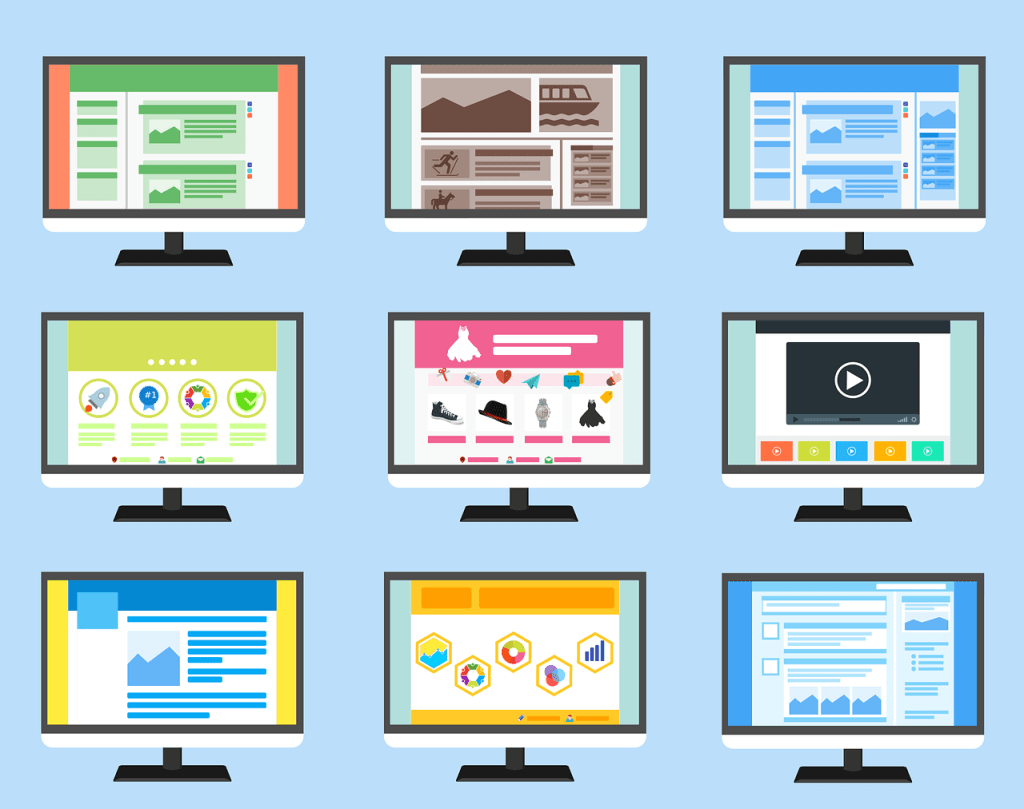
Your website is an essential part of your online presence, a virtual shop window, where people can check out your company and what services you offer.
What pages and content you include on your website will depend on the nature of your business. However, there are five essential pages that all service-based businesses will want to include.
Why have a website at all?
With the predominance of social media, some people may wonder if a website is still necessary. Some businesses do rely on social media for their online presence. However, there are many reasons why a business should also have a website, including:
It’s your own website. This means you have total control over the look and feel of your website; something you don’t get on social media platforms. Additionally, if the social media platform goes down, or even closes altogether, you still have an online presence.
Credibility. By looking at your website, people can see that you are a real business and look further into what you can offer, which helps to build trust and increase sales. There is also an opportunity here to stand out from your competitors.
Brand presence. Your website is your virtual shop window. This is where people can find out more about you and is part of the customer journey. From here they can choose to contact you.
The attention is on you. You’re not the only one on social media. Competitors, other interests, hobbies, advertisements, friends, and family are all in competition for a person’s attention on social media. It’s easy to get drowned out in all the noise. When someone visits your website, they are there just for you.
People can find you in search results. By adding relevant and helpful content to your website, you help people find you online. Additionally, your website isn’t hidden behind a paywall or walled garden (unless you create one, of course), as with a lot of social media platforms where you have to be logged in to see company information and posts.
Five essential pages for your business website
Now let’s have a look at five essential pages your business website should have.
1. Home page
The home page is where you introduce your business with the three most important points:
- who you are (company name)
- what you do
- who you serve
Also, remember to include links to other pages where people can either find out more or get in touch.
The most essential information should appear above the fold (the bit you see before scrolling down). However, don’t be tempted to try and cram everything into this space, as your message will end up getting lost, and people will be more likely to click away.
In general, don’t have too many words on your home page. The idea is to hook the visitor and then point them to other pages to find out more. This is also good for SEO as it reduces your bounce rate.

What is Bounce Rate?
Bounce rate is the number of people who leave your site after only visiting one page. If many people do this, it’s known as a high bounce rate. A high bounce rate indicates to search engines that the content on the page isn’t very useful (not very good news for SEO).
2. About Page
The About page is one of the most visited pages on a website as it’s where you go to find out more about a company. For service-based businesses, customers want to know if they can trust this business and whether or not they will be good to work with.
The About page tells your story, demonstrates your credibility, and builds trust. However, contrary to the title, it’s not all about you. Ultimately, your visitors want to know what’s in it for them. Therefore, you want to write with your audience in mind. Questions to consider include:
- Who are your ideal clients?
- What problems do they want to solve?
- How does working with you improve the lives of your customers?
- Why choose you (and not your competitors)?
Another top tip is to address your readers directly using the word you. Speaking to your readers makes you sound more human (and less like a corporate robot) and honest, which is more likely to build a connection with your readers.
3. Services
Your services page is where people go to find out more about the services you offer and what they entail. Depending on the nature of your business, you may have one or more pages dedicated to your services.
Your service page(s) also help people to find you online, because they are more likely to be searching for your services, rather than your company. Therefore, having the right keywords can help people find you in search engine results.
When writing about your services, be clear and concise and focus on your reader (i.e. your ideal customer). People are here for information about what it is you do and how you can help them. How do your services make their life better? What are the benefits of working with you? Show people why you are unique by talking about your process and what makes you stand out.
Testimonials provide social proof that you are as good as you say you are. Your services page is a great place to add some testimonials because it shows how you’ve helped others while also helping you to build trust with your website visitors.
Where relevant, link to other pages on your site where people can find out more. Not only is this really helpful for people, but it keeps them on your site for longer, giving you more opportunity to win them over.
Most importantly, make sure to include at least one compelling call to action (CTA) to make it easy for people to take that all-important next step, whether that’s to get in touch or download your latest whitepaper.
4. Contact page
Now you’ve wowed your customers, make sure they know how to get in touch. A good place to include contact details is in the footer of your website. That way, people can easily find your contact details to get in touch. Having a dedicated contact page also makes it super easy for people to contact you.
Beyond basic contact information, your contact page is another opportunity to sell your business by providing additional information customers may be looking for. For example, they may want to know where you are based (especially important if you work with local clients) or your opening hours.
Your contact page is potentially the beginning of a relationship with a new customer and therefore requires thought and attention. Here are some tips for writing your contact page:
- Keep it simple (brief and to the point)
- Include a Call to Action (i.e. let people know what to do next)
- Gently remind visitors why they should get in touch and how you can solve their problems. (However, be careful not to make the hard sell – they’ve already decided to get in touch!)
- Use interesting design elements (e.g. a captivating image or a photo of you or your team)
- Let your brand personality shine through in the copy (e.g. is your business quirky and light-hearted or formal and matter-of-fact?)
- You can also include your social media buttons here (but put them at the bottom rather than at the top)
- And most importantly, your contact information and a contact form if you’re using one
Using a contact form has its pros and cons, so whether you choose to use one will be a personal choice. A contact form helps guide the customer, uses a standard format, and the email address is always correct – so no emails go astray due to typos!
The cons of using a contact form are that there is one more thing on the website that could break and some customers are intimidated by forms. Therefore, I would suggest that if you use a contact form, also include your email address so that the customer can choose how to contact you.
It is well known that people have different preferences on how they like to contact a business. Some may prefer to call on the phone, while others may prefer email or chat. By providing people with different ways to contact you, you can cater to different preferences, reducing the chance of someone clicking away because they can’t find the contact option they are looking for.
5. Blog or news articles
Having a page where you can update your website with fresh content is invaluable. Here are three big reasons why:
I. A chance to show your expertise. Writing about the topics in your industry shows people that you know your stuff and that you keep up to date. This, in turn, builds trust in your business.
II. SEO. Search engines like sites that are regularly updated. Therefore, updating your site regularly with fresh content can help your rankings in search results.
Further reading: 9 SEO Copywriting Tips
III. Content Marketing. Content marketing aims to increase sales by attracting customers to your company with helpful or entertaining content. A blog or article helps drive traffic to your website, and you can build an audience over time who will be more likely to consider you when needing your services. Consistency is key when it comes to building an audience.
The downside to blogging or writing articles is that it can be time-consuming, and consistently coming up with fresh ideas can be challenging. This is where a writer can help.
Summary
The five essential pages for your website are:
- Home page
- About page
- Services page(s)
- Contact page
- Blog or articles
Does your website have all of them, or will you be making some additions? Do you have any questions? Contact me or let me know in the comments below.

Need help with your website?
I’m a copywriter with a focus on writing for service-based businesses, like yours.
Ask me how I can help with the wordy elements of your website.
 Anita CopySmith